Uncategorized

ACV and Keto – 4 Reasons why

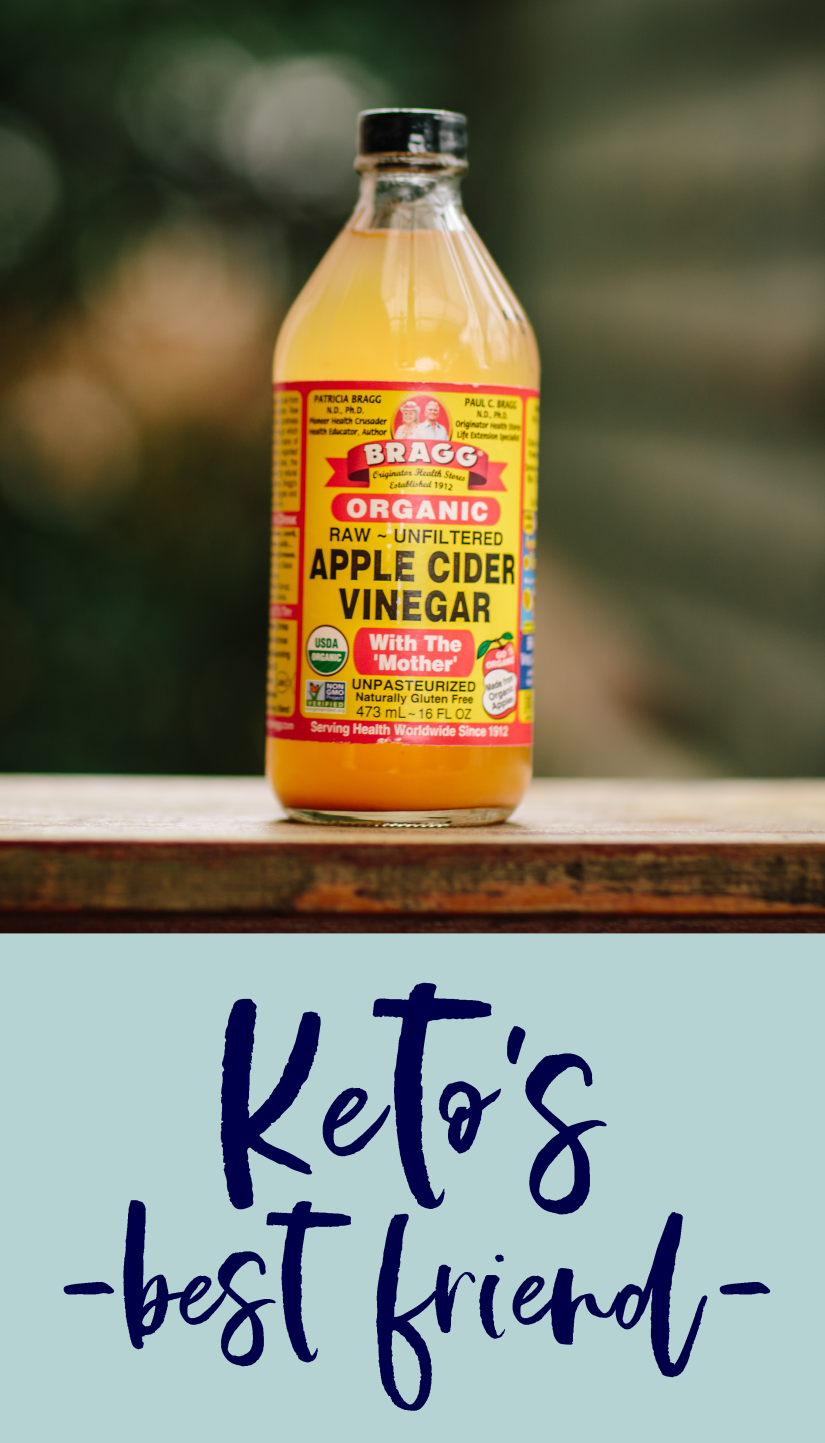
Keto's best friend

WHY SHOULD I TAKE APPLE CIDER VINEGAR ON KETO?

It seems like every time I am researching a topic to implement in our diet and lifestyle, something always comes up about apple cider vinegar.  Since there are so many health benefits to be gained from taking ACV, we shouldn’t be surprised.  But instead of the same list we read about how ACV is good for everything from bug bites (and it works!) to hiccups, I wanted to focus more on how it would relate to those of us on the ketogenic diet and those of us who are in pursuit of better health and quality of life. So, here are four reasons that you will love what ACV can do for you!

Blood Sugar

There have been several studies that show that the use of ACV improves insulin sensitivity and lowers blood glucose levels. Taking ACV will slow down the digestion of the carbohydrates eaten. With the carbs turning to glucose more slowly, it keeps the blood sugar more stable without spikes in glucose.  This will also help with inflammation.

One Swedish study showed that when people took ACV with water while eating a piece of white bread, it reduced the glycemic load of the bread ingested by over 45 percent!  However, while on a ketogenic diet, we hope you are not indulging in white bread!  Yet, if it will work that well on white bread, can you imagine how it will work for a low carb meal!

Carb Craving

Since most carb cravings are tied to blood sugar spiking and then going low, it would stand to reason that the ACV would help curtail these cravings with its sugar stabilizing property.

It is good to note that once you have been on the keto diet for a while and are eating a low amount of good, clean carbs, these cravings will be low, and in a lot of people, diminish altogether.  This has been true in my case.  I used to crave sugar and carbs a lot!  Seriously, when I first started, I just had to do what I could to get past the cravings, including eating treats with sweeteners like maltitol (which can also spike blood glucose in most people).  Then after a while on keto, I only wanted something I shouldn’t have once in a while.  I would try to plan those things I wanted around a family event where we would be eating out.  Now, I don’t even care anymore that I can’t have pasta, because there are things in my diet that are much more satiating!  Now, the challenge to find something on the menu that will be delicious but will allow me to stay in ketosis appeals more to me!  (It’s amazing how motivating the moving scale can be also!)

Fat Burning

 ACV helps with fat oxidation, which means it helps your body break down fats you eat into a form your body can use.  This will encourage your body to use the fats as fuel even more.

Also, the acetic acid within the ACV has been shown to burn fat at an accelerated rate in comparison to ketosis without the ACV.  The acetic acid is also believed to prevent fat build-up in the body by activating genes that normally break down fats.

Lower Triglycerides

If you remember my initial story of how we came to keto, one of the reasons was that my husband’s triglycerides were very elevated. This is one of the main reasons we started a daily regimen of ACV.  Using ACV daily has shown to reduce triglycerides, raise HDL (good cholesterol) all while lowering LDL (bad cholesterol).

How to take ACV

In our household, we take one tablespoon of ACV with 2 ounces of diet cranberry juice and about 6 ounces of water a few minutes before meals, and drink with a straw – I don’t know if it helps, but it will limit the exposure of your teeth to the acid at least somewhat.  We also rinse with water after drinking.  Some people also mix it in with salad dressing, or you can even buy it in capsule form now.  DO NOT try to take it straight without mixing it in something.  It is very strong and it could burn your esophagus without diluting it.

If you take a dose before bed, your fasting blood glucose in the morning will be lower.  Whereas a dose in the morning will give you more energy and get your body going!

Who Should Not Use ACV?

People who should not use ACV include those with TYPE 1 DIABETES, since they have no way to make insulin.  Also, pregnant or nursing women.  Because the ACV is not pasteurized, you could pass on things to your baby that may not be good for them.  The best rule is in any of these cases, ask your doctor before starting anything new.

Uncategorized

The Low Carb Bread that Ended My Search

The Low Carb Bread that Ended My Search...

When we start on a new way of eating, there is always something that we miss so much that we try everything to come up with a way to have that thing.  For me it was bread.  Not so much that I crave the bread, but that I just missed the versatility you get when you have bread on hand.

When I started on keto, I literally tried a dozen (at least) bread recipes, and most of them were either really eggy, really dense, or both.  Some just had a weird funky taste.  Then maybe two or three months ago, I was on a forum, just trying to learn something new and someone was talking about Diedre’s bread.  So, I started looking for the recipe, that I finally found on YouTube.  I love this bread!  The best part is…with the specific ingredients I used, if you slice the bread in 16 pieces, it is about 1.7 carbs a slice.  However, I only make it about every 10 days or two weeks.  I just want to have it for something special and not redevelop cravings for bread.

Once I found the recipe, there were some ingredients I wasn’t familiar with and, quite honestly, was a little skeptical.  After doing some research, I feel ok with these ingredients.

Oat Fiber – Not to be confused with oat flour, oat fiber actually does not contain any of the actual oat grain.  It is made from the hull of the oat, ground into a flour substance.  It is an insoluble fiber, which just means it passes through the digestive system without being absorbed, plus it does not affect blood glucose. Best of all, net carbs actually come out to zero. I buy the Lifesource brand Oat Fiber from Netrition.com.  It is not as strong tasting as some oat fiber brands.

The benefit of using oat fiber in place of something like almond flour is the carb count.  But it is not a 1:1 exchange.  It is more like ¼ cup of oat fiber to replace one cup of almond meal flour. Once I used oat fiber, I began to  experiment with it in other recipes.  As I find successful ways to use it, I will post them!

Vital Wheat Gluten – This flour is produced by washing wheat flour until all the starch is gone. Vital wheat gluten will not be an option for people with gluten sensitivity.  And even though it is not totally grain free, it is low carb and will lend itself to the low carb diet.  It is also full of protein! Something to keep in mind if you are figuring macros.

So following is the recipe for Diedre’s bread!  If you try it, let me know how it turned out!  Also, if you have any improvements, I would be happy to hear them!

20180824_171345

Diedre’s Kitchen Bread

  • 1 cup warm water
  • 1 packet of yeast*
  • 1 teaspoon of raw honey or maple syrup
  • 4 tablespoons powered sweetener or other sweetener** ground-up
  • 2 eggs, slightly beaten
  • 2/3 cup ground golden flax meal
  • ½ cup oat fiber
  • 1 ¼ cup vital wheat gluten
  • ½ teaspoon xanthan gum
  • 1 teaspoon pink salt
  • 2 tablespoons softened butter
  1. Place yeast, warm water and honey in a small bowl and let activate.  Make sure the water is warm to touch but not hot.  Hot water can kill the yeast.
  2. After yeast is activated, pour into bowl.  Add all other ingredients into stand mixer bowl.
  3. Let mix about 3 minutes and then use a spatula to make sure all dry ingredients are pushed into the dough.
  4. Continue to mix another 4 minutes.  At this point the dough should be well mixed and may even be taking on a balled appearance.
  5. Form dough into loaf shape. Place in a greased non-stick or glass pan, or into a silicone bread pan.***
  6. Cover with plastic sprayed with cooking spray or oil.  Place in warm place to rise.  After one hour, check the bread. If it is not double in size, give it a little more time.
  7. Bake for 20 to 25 minutes in a 375 degree oven.
  8. Remove promptly from pan and let cool on a wire rack before cutting.

Notes:

*The original recipe calls for 1 tablespoon of instant yeast.  I have found the regular yeast activated in the warm water has worked better for me.  Maybe my instant yeast is bad?

**The original recipe calls for 4 tablespoons. I found this too sweet and usually use half.  I also grind the sweetener in my blender, in the food processor or in a coffee grinder I have just for this purpose.  Sometimes I just use packets of an erythritol/stevia blend.  I am still trying to work out how much.  Today, I used 4 packets.

***I use a silicone bread pan. It does not stick and comes out so easily.  However, I want to try a regular bread pan to see if I can get more height on my bread as opposed to it spreading out and making more of a wide loaf.

20180824_163946